
How Kids Learn to Try New Foods: Part 1, the Groundwork
Quick Answer
The first step toward helping children try new foods is to remove all pressure around eating. When children sense that trying new foods is a goal adults have for them, they resist. Before any tips or strategies, you need to create a calm, low-pressure mealtime environment. This is the groundwork, and without it, nothing else works.
What’s the First Step to Helping Kids Try New Foods?
The first step toward helping children try new foods is to stop working on it!
What?! Yep. You did, in fact, read that correctly.
If kids have a sense that trying new foods (or eating in a certain way) is a behavior you want from them, you have unwittingly created a major barrier to dietary expansion. If your kiddo is even a little bit of a cautious eater, even the most gentle expectation that they try something new can feel like pressure. Kids defend against mealtime pressure (unconsciously) by sticking to rigid rules about what they will and won’t eat.
Okay, this isn’t 100% true when it comes to that rare beast, the food-positive child. The little foodies in our lives may even take a certain pride in trying anything, and in enjoying a wide range of tastes and textures, they may respond really well to encouragement to try things. This, however, applies to a minority of children, and our guess is that if you’ve decided to dedicate your precious time to reading an article about building internal motivation to eat, chances are you don’t have one of these mini-foodie-unicorns living in your house.
Is This Groundwork Right for My Child?
The guidance we’re going to share in this post is for parents of children who are picky eaters, or at least verging on picky. If your child eats well already, just keep on going as you are! Continue to provide (and eat) a varied diet, and their relationship with food will likely go from strength to strength.
What’s the Core Advice for Parents of Picky Eaters?
On the other hand, if you’re a parent looking for tips to counter picky eating because your child is wary of unfamiliar foods, this central piece of advice is for you: step back a bit and chill.
Of course, you can’t (and shouldn’t) be relaxed about your child’s diet if you have worries about their health, so if you’re truly concerned that they may not be meeting their needs, get this checked out by their healthcare provider. This caveat aside, if you can take the pressure off and shift the focus completely away from increasing the variety in their diet, this will paradoxically improve their eating. And (bonus) it will result in lower-stress, more enjoyable meals for you too.
How Do I Create the Right Mealtime Environment?🤷♀️
Once you have taken all the pressure off and have sought help for any actual worries about your child’s health, the next step is to create the best possible mealtime environment. This is the key point we really want to make: to support children’s eating, the task is to change how meals feel in order to lay the groundwork so their natural curiosity can emerge.
There are a few factors involved in getting the environment right:
• 🧑🧒🧒 Connection (eating with them as much as possible, and being present and attuned rather than ‘on their case’)
• 👧 Autonomy (giving children freedom to decide for themselves whether to eat or try foods, and to decide how much to eat)
• 🍎 A meal and snack routine (this can be flexible and should fit with your family’s lifestyle)
• 🍓 Family style serving (while this doesn’t work for every family or child, a self-serve model can be a huge part of getting eating on track)
• 🧀 Always planning in some accepted foods (so you’re never presenting your child solely with an array of disliked or unfamiliar dishes)
The groundwork at a glance: what to do before any food strategy
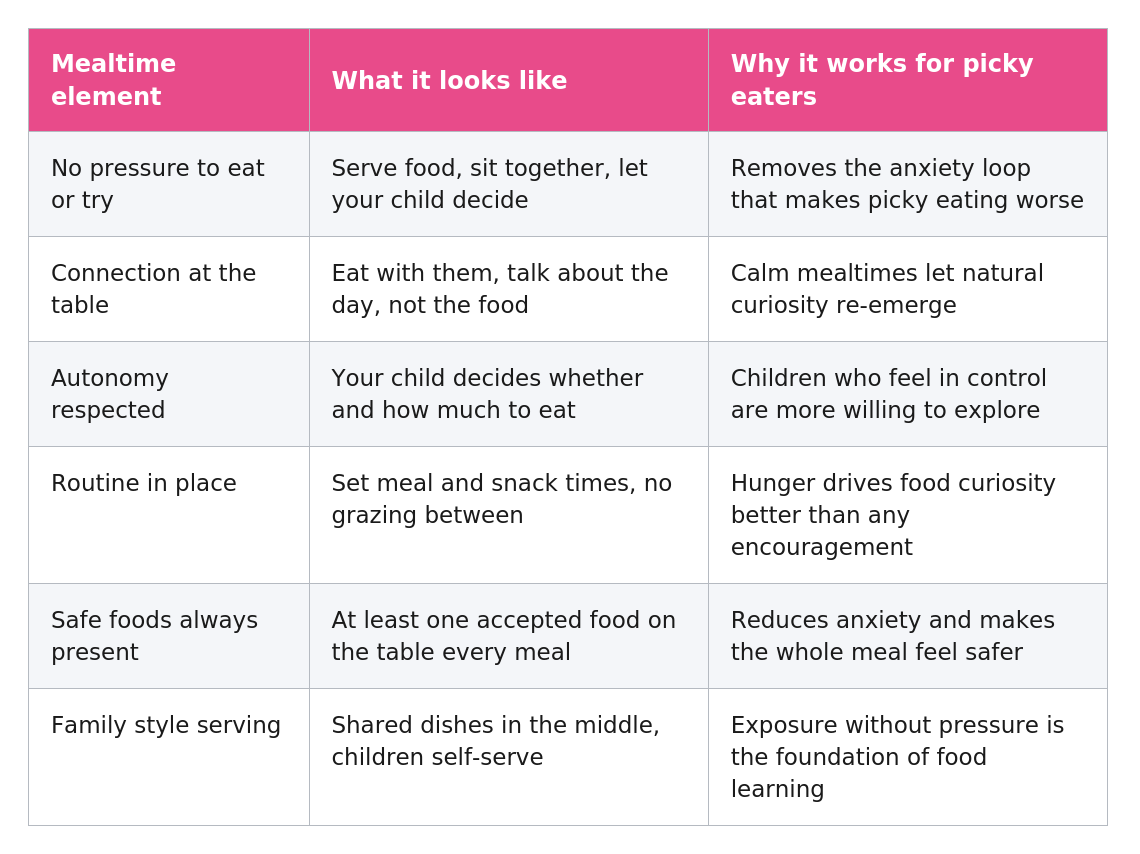
Mealtime strategies that help picky eaters eat without pressure
What Is Responsive Feeding?
You can read more about the benefits of responsive feeding here. Responsive feeding is considered the gold standard for raising confident eaters.
In order to decide whether you have the groundwork in place and are ready to learn about how children naturally branch out to new foods, we’ve put together this flow chart for you.
And if you’re confidently working on embedding responsive feeding in your home (it takes time), there are a few ideas in the next post in this series on ways to support dietary expansion that you can get on with in the meantime.
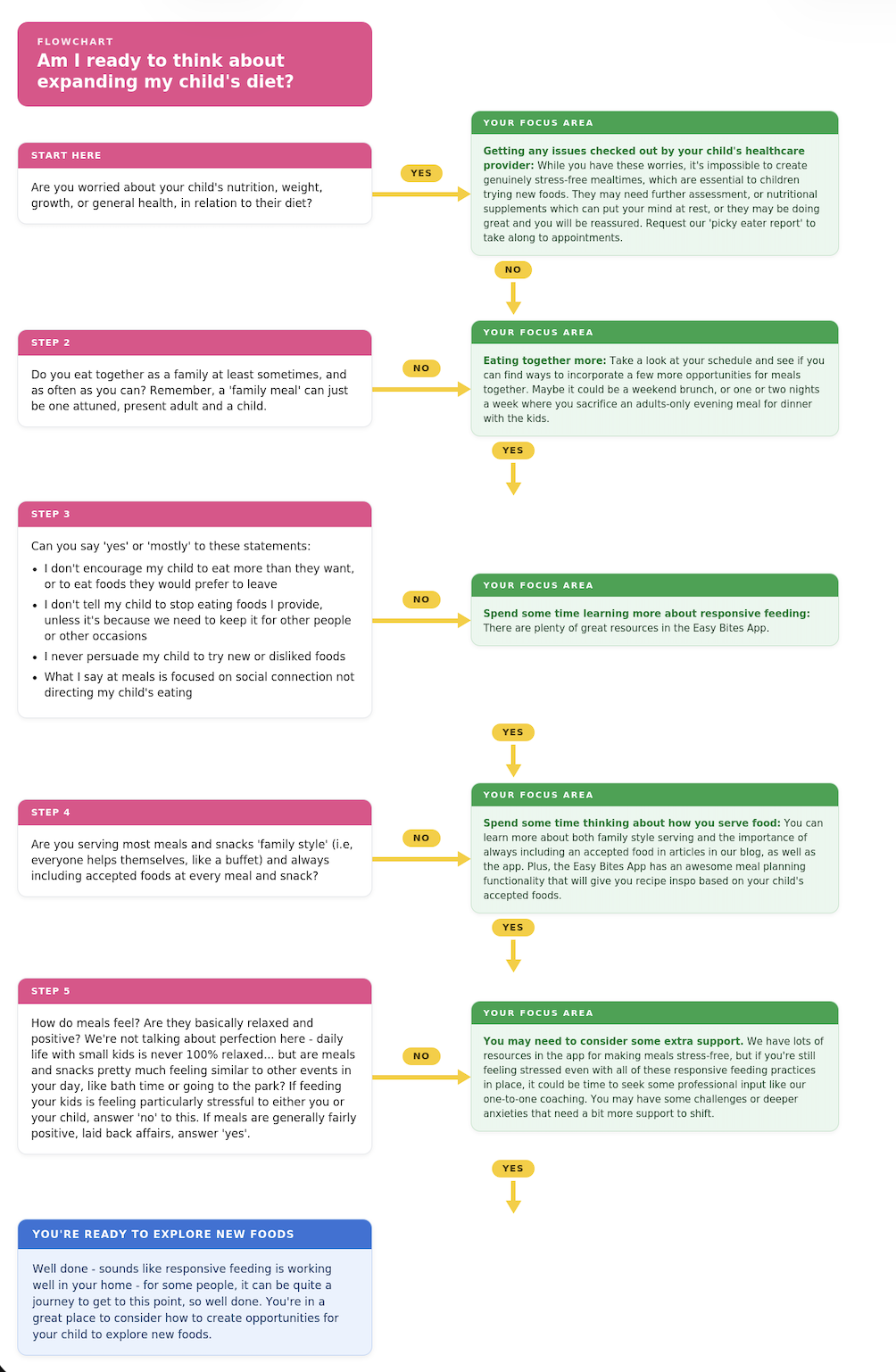
Responsive feeding flowchart: five questions to check if your child is ready to try new foods, with a focus area for each answer
Ready to create a calmer mealtime?
The Easy Bites App is built to support exactly this kind of change. Request your personalised Picky Eater Report to understand what is driving your child’s eating and get practical, evidence-based guidance tailored to them. You do not have to figure this out alone.
Frequently Asked Questions❓
Will my child ever try new foods if I stop encouraging them? 🤷♀️
Yes, and removing encouragement is often what makes it possible. When children no longer feel pressure to try things, the anxiety that was blocking their natural curiosity dissolves. Most parents are surprised to see their child begin exploring food independently once the pressure is gone. The Ellyn Satter Institute has decades of research supporting this.
How long does it take to see results after removing mealtime pressure? 🧐
Most families notice a change in the emotional quality of mealtimes within 4 to 6 weeks. Actual dietary expansion typically takes longer, often 3 to 6 months. The groundwork phase is about changing how mealtimes feel, not immediately about broadening diet. Be patient. This is a long game with a very good outcome.
What if my child only eats a handful of foods and I am worried about their nutrition? 🥬
If your child eats fewer than 20 foods, is losing weight, or is missing entire food groups, speak to your paediatrician. The groundwork approach is right for most picky eaters, but some children benefit from professional support.
Is this approach the same as just letting them eat what they want? 🫐
No. Responsive feeding has clear structure. You decide what food is offered, when meals happen, and where you eat. Your child decides whether they eat and how much. This is not permissive feeding. It is a structured, evidence-based approach that respects the role both parent and child play in eating.
My child has always been picky. Is it too late to lay this groundwork? 👶
It is never too late. Children’s eating can and does change at any age when the mealtime environment changes. Families who make these shifts when their children are older, including school age and into adolescence, still see meaningful improvements. Start with the groundwork and give it time.
Until then,
Easy Bites
